
Small Business
Your Small Business Website — What It Needs to Actually Work
For most small businesses, the website is the first interaction a potential customer has with the brand.
Before they call. Before they visit. Before they ask a friend or read a review — they check the website. That visit forms an impression in seconds, and that impression shapes every decision that follows.
A small business website that loads quickly, communicates clearly, and works flawlessly on mobile sends a powerful signal before a single word is read: this business is professional, reliable, and worth trusting. A website that loads slowly, looks outdated, or breaks on mobile sends the opposite signal — regardless of the actual quality of the business behind it.
Understanding what a small business website actually needs to perform is the foundation of getting more from the asset most businesses already have.
Why Most Small Business Websites Underperform
The most common reason small business websites underperform isn’t poor design or bad copy. It’s the build-and-forget model — a website that was built once, handed over, and left to slowly degrade without active maintenance or ongoing optimization.
A website treated as a one-time expense rather than an ongoing business asset will consistently deliver less than it’s capable of. Performance degrades. Search visibility erodes. The mobile experience falls behind as browsers and devices evolve. The site that was competitive at launch becomes less competitive every month without anyone making a deliberate decision to let that happen.
Why small businesses need more than a basic website covers the gap between what most small business websites deliver and what modern customers expect — and why that gap has grown significantly in recent years.
What a Small Business Website Should Be Doing for Your Business
A properly maintained small business website isn’t just a digital brochure. It’s a sales tool, a credibility asset, a search visibility engine, and a customer communication channel — all working simultaneously, around the clock, without requiring the business owner to be present.
Your website is your best sales tool — but only when it’s performing at the level it needs to. That means fast load times, clear messaging, strong mobile experience, and the kind of professional presentation that builds trust before a visitor has interacted with anyone from the business.
The articles in this section cover every dimension of small business website performance — from the common mistakes that quietly undermine results, to what the shift toward managed websites means for growing businesses, to what to look for when choosing a platform that will actually support your growth.
Featured Articles

What Small Business Owners Get Wrong About Their Website
Quick Takeaways What Small Business Owners Get Wrong About Their Website Small business website mistakes…Why Your Website Is Your Best Sales Tool
Quick Takeaways Why Your Website Is Your Best Sales Tool Most small businesses have a…Why Small Businesses Need More Than a Basic Site
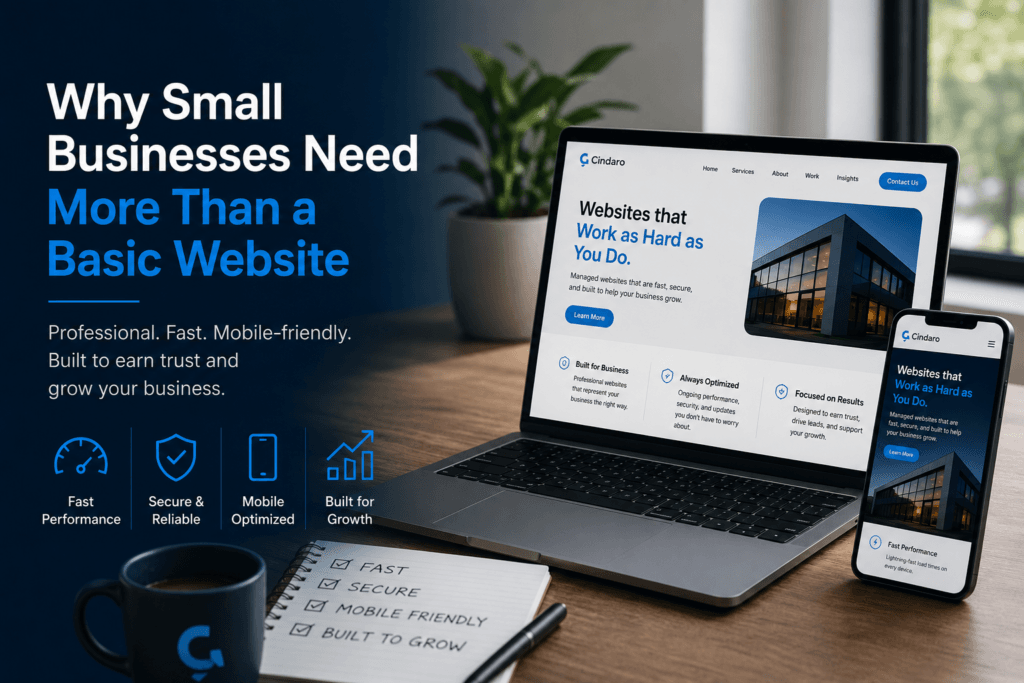
Quick Takeaways Why Small Businesses Need More Than a Basic Website Small business website needs…The Hidden Cost of Managing Your Own Website
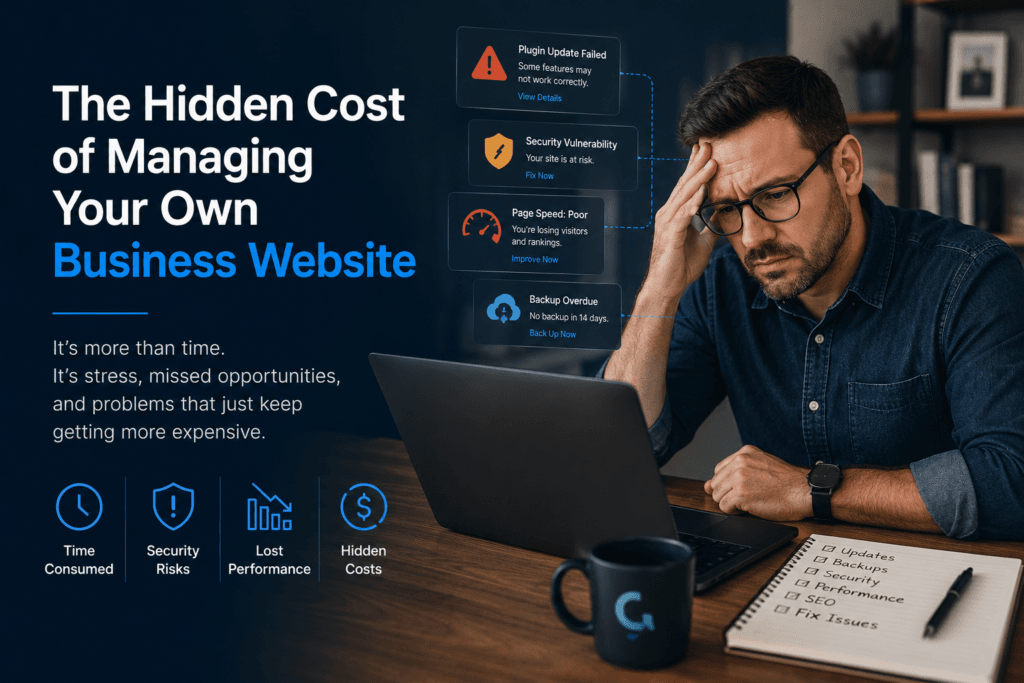
Quick Takeaways The Hidden Cost of Managing Your Own Website Managing your own business website…How Your Website Affects Your Brand Credibility
Quick Takeaways How Your Website Affects Your Brand Credibility Website credibility for small business is…Why Small Businesses Are Moving to Managed Websites
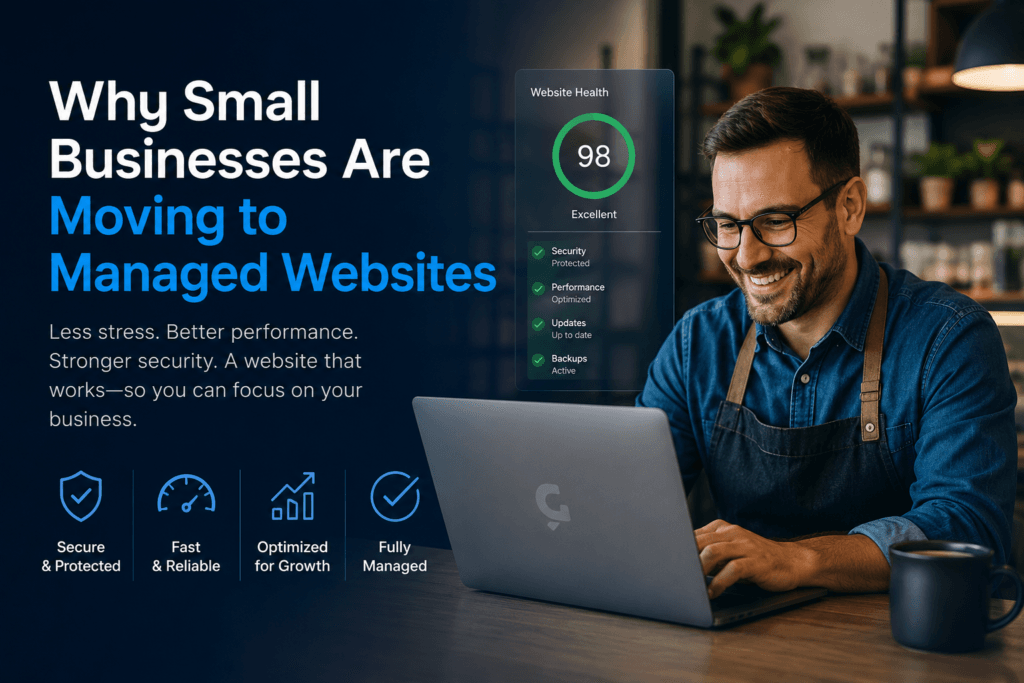
Quick Takeaways Why Small Businesses Are Moving to Managed Websites Something is shifting in how…
What to Look For in a Website Platform for Growth
Quick Takeaways What to Look For in a Website Platform Built for Growth Website platform…


Frequently Asked Questions About Small Business Websites
What should a small business website include?
A small business website should clearly communicate who the business serves, what it offers, and why it’s the right choice — without requiring visitors to work to understand it. It needs fast load times, particularly on mobile. It needs clear calls to action that make the next step obvious. It needs to be technically maintained so it stays secure, performs consistently, and supports search visibility over time. What small business owners get wrong about websites covers the most common gaps between what small business websites deliver and what they should.
How much does it cost to manage a small business website?
The real cost of managing a small business website depends heavily on the model. DIY management appears low-cost but carries significant hidden costs in time, reactive repairs, and security incidents. Professional managed website services replace unpredictable variable costs with a consistent monthly investment that covers design, hosting, security, and ongoing maintenance. The hidden cost of managing your own website provides an honest breakdown of what DIY website management actually costs over time.
What is a managed website service for small business?
A managed website service is an arrangement where a provider handles the design, hosting, maintenance, security, and performance of a small business website as an ongoing service — rather than a one-time build. The business gets a professionally maintained website without having to manage it themselves. Why small businesses are moving to managed websites covers why more businesses are making this shift and what drives the decision.
How does my website affect my brand credibility?
Your website is the first thing most potential customers check before making any decision about your business. A fast, professional, well-maintained website signals reliability and competence before any human interaction occurs. A slow, outdated, or inconsistently maintained website signals the opposite — regardless of the actual quality of the business. How your website affects your brand credibility covers the specific ways website quality shapes customer perception and trust.
What should I look for in a website platform for my small business?
A website platform for small business growth should deliver strong performance without requiring the owner to manage it, take a proactive approach to security, treat SEO fundamentals as part of the foundation, provide clear and predictable pricing, and scale with the business over time. What to look for in a website platform for growth covers each of these criteria in detail and explains why they matter for long-term results.
Have Questions?
Choosing the right plan is an important decision. If you have questions about features, onboarding, support, billing, or the Cindaro process, we’re happy to help.
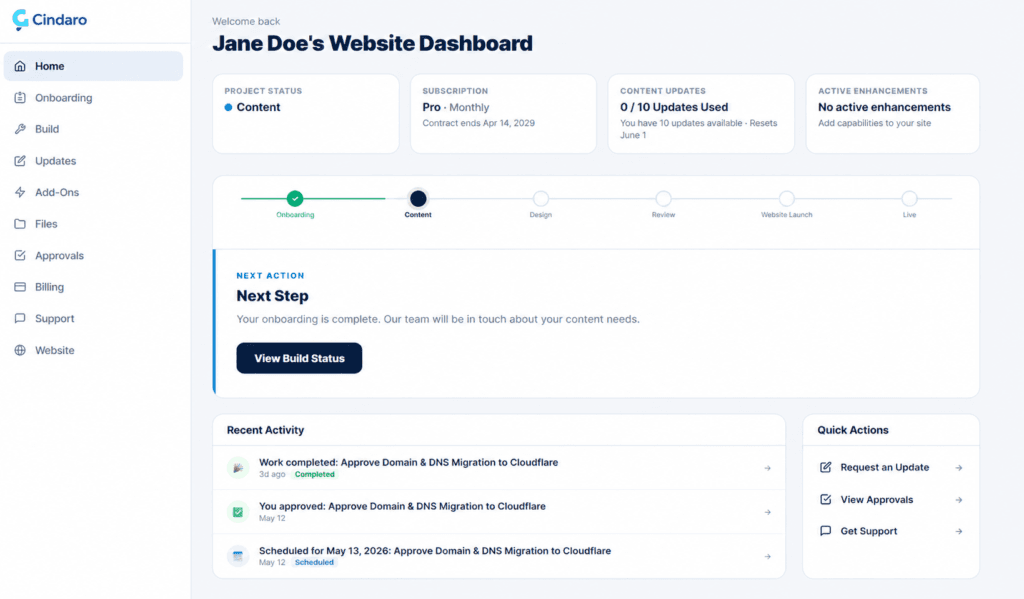
Every Cindaro plan includes managed hosting, security, maintenance, and ongoing support designed to keep your website running smoothly long after launch.