
Quick Takeaways
- A review farm is a service that sells fake reviews, written to order and posted from many accounts so they look like real customers.
- We were pitched one directly: packages of 5 to 100 Google reviews with “scheduled delivery.” Five days later, a second seller offered up to 200, sold as “authentic feedback.”
- You can’t buy Google reviews legitimately. Google bans paid reviews, and since October 2024 the FTC can seek civil penalties against businesses that knowingly buy or sell fake ones.
- Fake reviews leave patterns: a steady drip of generic praise, repeated phrasing, and reviewer profiles that praise businesses in distant cities.
- The honest alternative works: ask every happy customer, make it easy with a direct link, and reply to every review.
A review farm is a business that sells fake online reviews. It writes reviews to order, posts them from a pool of accounts made to look like real customers, and spaces them out so the platform doesn’t notice. Google reviews are one of their biggest products, because a business’s star rating is often the first thing a customer sees on Google Maps.
This isn’t hypothetical for us. Cindaro builds and manages websites for small businesses, and on September 1, 2026, a review farm emailed us an unsolicited sales pitch. Here’s what they were selling, how these operations work, why buying reviews is a bad bet, and how to tell when the reviews you’re reading are fake.
The Sales Pitch We Received
The email offered Google reviews in packages of 5, 10, 20, 50 or 100, priced per review with a volume discount. Each review would be 50–100 words, written for us. The pricing looked like any software checkout, complete with a “Most Popular” tier and a “Best Value” badge.
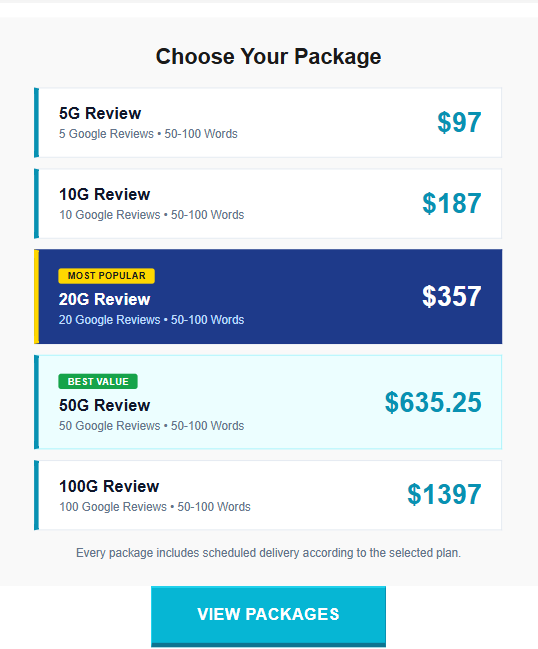
The revealing detail is scheduled delivery, included in every package. Instead of posting all the reviews at once, the service spreads them across a period you choose. The email doesn’t say why, but the effect is obvious: a steady trickle looks like real customers, while 50 reviews in one day looks like exactly what it is.
We didn’t reply, and we don’t buy reviews. But the pitch shows how normal this has become: fake reviews are sold like a subscription, to any business with an email address.
It Wasn’t the Only Pitch
Five days later, on September 6, 2026, a second seller emailed us. Different company, different design, same product, with larger packages and longer reviews:
| First pitch (Sept 1) | Second pitch (Sept 6) | |
|---|---|---|
| Packages | 5 to 100 reviews | 5 to 200 reviews |
| Price range | $97 to $1,397 | $89 to $2,299 |
| Price per review | $19.40 down to $13.97 | $17.80 down to $11.50 |
| Review length | 50–100 words | 100–200 words |
| Drip-feed | “Scheduled delivery” | “Gradual delivery option” |
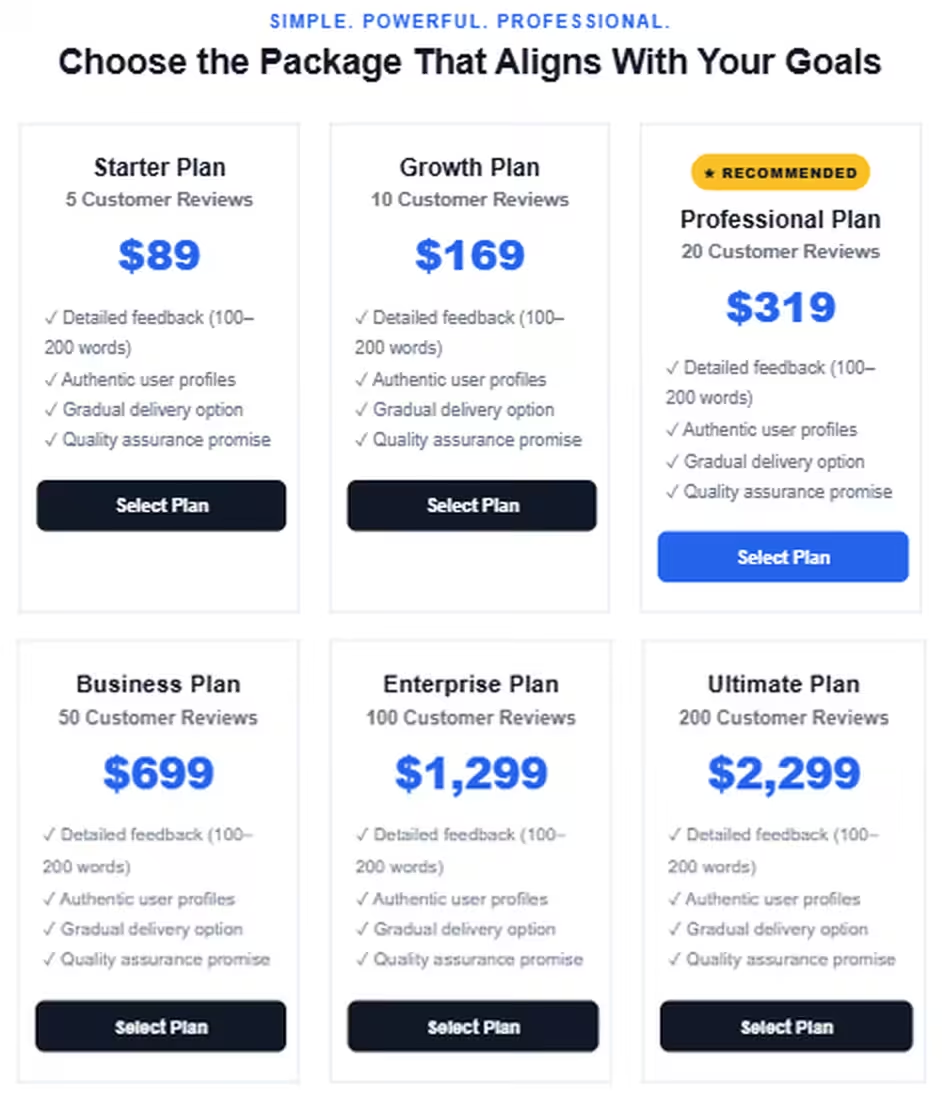
The second email never uses the word “fake.” It sells “authentic feedback” from “authentic user profiles,” wrapped in the language of a reputation management service. Read closely, though, and it describes exactly how a review farm avoids detection:
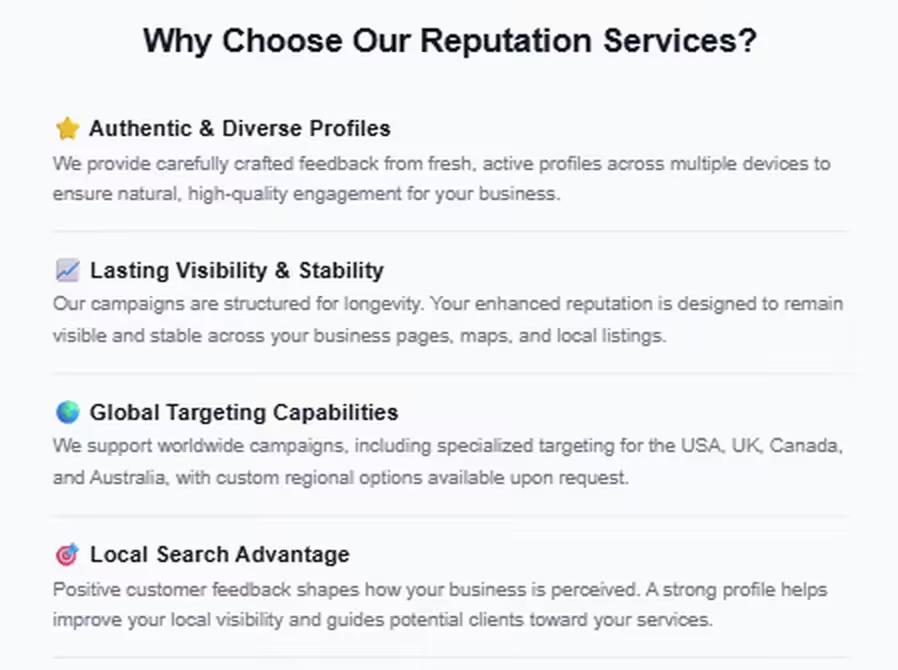
- “Fresh, active profiles across multiple devices” to “ensure natural, high-quality engagement.” In other words, reviews posted from many accounts and devices so they don’t look like they came from one source.
- “Lasting visibility and stability” across “business pages, maps, and local listings.” A promise that the reviews are built to survive Google’s removal.
- “Specialized targeting for the USA, UK, Canada, and Australia,” so reviews appear to come from the right country.
- A footer claiming we “expressed interest” through their website. We didn’t. It’s a common way to make unsolicited email look requested.
- A throwaway sending domain named after a prescription drug, with no connection to the company name in the email. Legitimate businesses send from their own domain.
Two separate sellers pitched one small business in less than a week. If you run a business with a Google profile, you’re almost certainly on these lists too.
How Review Farms Work
Operations vary, but most follow the same pattern:
- Accounts: the farm controls a large pool of reviewer accounts, often with profile photos, names and a history of other reviews so they pass a quick glance.
- Writing: reviews are written to order, sometimes by people paid per review and increasingly with AI, using details from your website so they sound specific.
- Spreading: reviews are posted from different accounts, devices and locations to avoid looking like they came from one source.
- Scheduling: delivery is dripped out over weeks or months, which is the feature our pitch led with.
- Replacement: many sellers promise to replace reviews that Google removes, which tells you how often that happens.
Some farms sell the opposite too: negative reviews aimed at a competitor. Google’s policy and the FTC rule both ban that as well.
Can You Buy Google Reviews?
Plenty of sites will sell them, but you can’t buy Google reviews without breaking Google’s rules. The Google Maps content policy lists, as fake engagement that “is not allowed and will be removed”:
Reviews or ratings that have been paid for, directly or in kind.
Google Maps User Generated Content Policy
The same policy says businesses may not offer incentives “such as payment, discounts, free goods and/or services” in exchange for posting a review, or for changing or removing a negative one. That rules out more than review farms: a discount for leaving a review, or a free service for a 5-star rating, breaks the policy too.
Are Fake Reviews Illegal?
In the US, yes, for businesses. The FTC’s rule on consumer reviews and testimonials, which took effect in October 2024, prohibits businesses from:
- Creating, selling or buying reviews from people who don’t exist (including AI-generated reviews) or who never used the business
- Paying or rewarding customers for reviews that express a particular sentiment, positive or negative
- Posting reviews by owners, managers or employees without clearly disclosing the connection
- Using threats or intimidation to get negative reviews removed
- Buying fake social media followers or views to look more influential
The rule lets the FTC seek civil penalties against businesses that knowingly break it. Those penalties are assessed per violation, and with fake reviews, every review can count. State consumer protection laws can apply as well.
What Happens If a Business Buys Reviews?
- The reviews disappear. Google removes reviews it identifies as fake, often in batches, taking the business’s rating down with them.
- The profile can be restricted. Google may limit or suspend Business Profiles involved in fake engagement.
- Legal exposure. Under the FTC rule, a business that knew or should have known reviews were fake can face civil penalties.
- Customers notice. A wall of generic 5-star reviews is increasingly a red flag rather than a selling point.
How to Tell If Google Reviews Are Fake
You can’t prove a single review is fake, but manufactured reviews tend to share patterns. Look for several of these together:
- A steady, unnatural cadence: a few reviews every week for months, with little variation.
- Generic praise: “great service, very professional, highly recommend” with nothing about the job, the person, the timeline or the problem solved.
- Repeated phrasing: similar sentences and structure across many reviews.
- Odd reviewer histories: click a reviewer’s name. Fake accounts often review businesses in distant cities, many unrelated services, or only 5-star reviews posted in bursts.
- The same reviewers across “branches”: one person praising a company’s locations in different states.
- A suspiciously perfect rating: hundreds of reviews and almost no complaints, for a type of business that usually gets some.
- A sudden spike after a long quiet stretch, or right after a run of negative reviews.
Real reviews are often messier: they mention a technician by name, describe a specific problem, include a small complaint, or come with photos of the work.
How to Report Fake Google Reviews
If you’re a customer
On Google Maps, find the review, tap the three-dot menu and choose Report review. Pick the reason that fits, such as spam or fake content. Google also has a form for reporting a business you believe is buying positive reviews; search for it in the Google Business Profile Help Center.
If you’re a business owner with fake reviews on your profile
Sign in to your Business Profile, open your reviews, and report each fake one from its menu. Google’s reviews management tool lets you check the status of what you’ve reported. Reply calmly and briefly to fake negative reviews in public while you wait. Future customers read your replies, and a professional response helps more than an angry one.
Keep a record of the reviews, dates and anything that links them, such as the same accounts or wording. It helps if you need to appeal or escalate.
What to Do Instead: Get More Real Reviews
Real reviews take longer, but they keep working and can’t be taken away. What works for small businesses:
- Ask every happy customer, at the moment they’re happiest: right after the job is done or the problem is solved.
- Make it one tap: send your direct Google review link by text or email, and put a QR code on invoices and receipts.
- Ask everyone, not just the people you expect to be positive. Asking only happy customers (“review gating”) breaks Google’s guidelines.
- Never offer anything in return. No discounts, entries or freebies for a review.
- Reply to every review, good and bad. It shows customers someone is paying attention.
Reviews are one part of how customers judge you online. See 17 ways to make your website more trustworthy and the small business SEO checklist for the rest.
Fake Reviews Are Often One Part of a Bigger Facade
Bought reviews rarely appear alone. When an agency or contractor is trying to look bigger or more local than it is, you’ll often see them alongside:
- Keyword-stuffed profile names like “Best Web Design Dallas” instead of the company’s real name, which Google’s guidelines don’t allow.
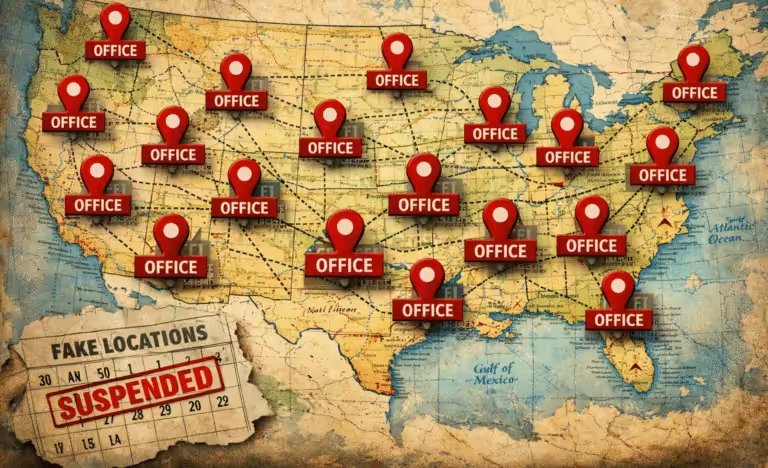
- Unstaffed addresses presented as local branches, with a map pin in every city.
- City pages with copied text where only the city name and phone number change.
- Paid “Best of [City]” badges and stock photos presented as the team.
Each of these can have an innocent explanation on its own. Together, they’re worth a closer look. See The Map Is Full of Pins. Is Anyone Actually There? for how to check what a local address really represents.
Fake Review FAQs
What is a review farm?
A business that sells fake reviews. It writes them to order and posts them from many accounts, usually spread over time, so they look like they came from real customers.
Can you buy Google reviews?
Sellers exist, but buying them breaks Google’s policy, which bans reviews “paid for, directly or in kind.” In the US, knowingly buying fake reviews also violates the FTC’s rule on reviews and testimonials.
Is buying Google reviews illegal?
For US businesses, buying fake reviews is prohibited under the FTC rule that took effect in October 2024, and the FTC can seek civil penalties against knowing violators. Google will also remove the reviews and can restrict the profile.
Can Google tell if you buy reviews?
Often, yes. Google uses automated systems and manual reviews to detect fake engagement and removes reviews it identifies, sometimes long after they were posted. The “replacement guarantees” many sellers offer exist because removal is so common.
Can I pay customers or give a discount for a Google review?
No. Google doesn’t allow any incentive for reviews, including discounts and free services, even if you don’t ask for a positive one. You can ask every customer for honest feedback.
How do I report a business that buys reviews?
Report the individual reviews on Google Maps, and use Google’s form for reporting a business that buys positive reviews, found in the Business Profile Help Center. You can also report deceptive practices to the FTC at ReportFraud.ftc.gov.
Read more in the transparency in web design series or browse all topics at Cindaro Resources.
Every Cindaro plan includes managed hosting, security, website maintenance and ongoing support from day one, not as optional add-ons. See how it works or view our pricing.