

Quick Takeaways
- Yes, almost every business needs a website, even one that gets most of its work from referrals. People look you up before they call, and a website is where they check that you’re real, good, and right for the job.
- A Google Business Profile and social media pages help, but they don’t replace a website. You don’t own them, and they can’t explain your services, prices, and process the way your own site can.
- A website works when you don’t. It answers questions, builds trust, and collects calls and quote requests at night and on weekends.
- A simple site with five or six pages is enough for most small businesses, as long as it’s fast, works on phones, and makes it easy to contact you.
- The real downside isn’t the cost. It’s an outdated or broken website, which can do more harm than having none.
Yes, you almost certainly need a website for your business. Even if most of your customers come from referrals, word of mouth, or social media, people look you up online before they get in touch. A website is where they confirm you’re a real, established business, see what you offer and roughly what it costs, and decide whether to call you or the next business on the list.
Below is when a website matters most, whether a Google Business Profile or Facebook page is enough on its own, ten specific ways a website helps a small business, what it actually needs to include, and what it costs.
The Short Answer: Who Needs a Website?
Nearly every business that wants new customers. It matters most if any of these are true:
- Customers search Google for what you do, like “plumber near me” or “bookkeeper for small business.”
- You get referrals. Referred customers still look you up before calling.
- You compete with other local businesses that already have good websites.
- Customers need information before they buy: services, prices, service area, hours, or examples of your work.
- You want to grow, hire, or raise your prices, and need to look established to do it.
The rare exceptions are businesses that are fully booked for the foreseeable future, don’t want new customers, or work entirely through a marketplace or employer that sends them all their work. Even then, a simple one-page site with your name, what you do, and how to reach you protects you if that changes.
Is a Google Business Profile or Facebook Page Enough?
They’re worth having, and a Google Business Profile is especially important for local businesses. But they work best alongside a website, not instead of one:
| Your website | Google Business Profile | Facebook or Instagram | |
|---|---|---|---|
| Who controls it | You | Meta | |
| Shows up in Google search | Yes, for many searches | Mostly in the map results | Rarely |
| Room to explain services and prices | Unlimited | Limited | Limited, gets buried in the feed |
| Looks established to new customers | Yes, if it’s well made | Partly | Less so on its own |
| Can change rules or disappear | No | Yes | Yes |
| Can collect quote requests, bookings, and emails | Yes | Basic | Basic |
Social platforms and listings are rented space. Pages get suspended, reach drops when the algorithm changes, and you can’t control what appears next to your business. Your website is the one place online you fully own, and it’s where your profile and social posts should send people.
10 Reasons Your Business Needs a Website
1. Customers look you up before they call
Whether they heard about you from a neighbor, a flyer, or a truck on the road, most people search your name before getting in touch. If they find nothing, or only an old directory listing, many move on to a business that looks more established.
2. It makes you look credible
A professional website signals that you’re a real, stable business. Real photos, reviews, licenses, and a clear description of what you do answer the “can I trust them?” question before anyone picks up the phone. See what makes a business website credible.
3. It helps people find you on Google
A website gives Google something to show for searches like “roof repair in Denver” or “family dentist near me.” Without one, you’re limited to the map results and directory sites. With one, every service page and article is another way to be found. See what search visibility means for a small business.
4. It works when you don’t
Your website answers questions and takes inquiries at 10 p.m. on a Sunday, while you’re on a job, and while you’re on vacation. For a small business owner who can’t answer every call, it’s like having a salesperson who never takes a day off.
5. It answers the same questions so you don’t have to
Service area, hours, pricing ranges, how the process works, what to expect: putting these on your site cuts down on calls from people who aren’t a good fit and helps the right customers decide faster.
6. It shows your work
Photo galleries, before-and-after shots, case studies, and reviews show customers what they’ll get. For service businesses, this is often the most persuasive part of the site.
7. It brings in leads directly
Contact forms, quote requests, online booking, and click-to-call buttons turn visitors into leads. Unlike a social post, those inquiries come straight to you.
8. Your competitors have one
When someone compares three businesses and only two have websites, the one without a website usually loses, even if its work is better.
9. You own it
Social platforms change their rules, and listings can be edited by others. Your website, domain, and email address belong to you, so the customers and reputation you build there stay with your business.
10. It makes all your other marketing work better
Business cards, truck signage, trade show banners, ads, and social posts all need somewhere to send people. A website gives every piece of marketing a place to point, and lets you see what’s actually bringing in visitors.
Your Website Is Your Best Sales Tool
Most small businesses sell through phone calls, estimates, and face-to-face conversations, which all need you to be there. Your website does that early sales work on its own: it makes the first impression, answers basic questions, and builds trust before the first conversation happens.
That means the website is often the deciding step between hearing about you and calling you. A clear, fast site sends people to that first call already confident in you. A slow, confusing, or outdated one sends them back to Google. To do that job well, a website needs to:
- Say clearly what you do, for whom, and where, in the first few seconds.
- Load fast and work on phones, where most visitors arrive. See why mobile website speed matters.
- Prove you’re trustworthy with reviews, real photos, and credentials.
- Make the next step obvious on every page: call, request a quote, or book.
What a Small Business Website Needs
Most small businesses don’t need a big site. These pages cover what customers look for:
| Page | What it should include |
|---|---|
| Home | What you do, who you serve, where you work, and a clear way to get in touch |
| Services | Each main service explained, ideally with its own page |
| About | Who runs the business, how long you’ve been doing it, real photos |
| Reviews or work examples | Named reviews, project photos, or case studies |
| Contact | Phone, email, a form, service area or address, and hours |
| Privacy policy | Required if you collect names or emails through forms |
Beyond the pages, the basics matter just as much: a domain name in your business’s name, an email address on that domain, HTTPS security, fast loading, and a design that works on phones.
Are There Downsides to Having a Website?
A few, and they’re worth knowing about up front:
- It costs money. Even a simple site has costs for the domain, hosting, and either your time or someone else’s to build it.
- It needs looking after. Software updates, security, backups, and content changes don’t stop after launch. See why websites need ongoing maintenance.
- A neglected site can hurt you. Old prices, a broken contact form, or a “Not secure” warning can make customers think you’ve gone out of business.
None of these is a reason to skip a website. They’re reasons to plan for how it will be kept up to date after it launches.
How Much Does a Small Business Website Cost?
It depends mostly on who builds it and who keeps it running. These are typical ranges:
| Option | Typical cost | Good fit for |
|---|---|---|
| DIY website builder | About $15–$50 a month, plus your time | Very simple sites, owners with time to learn and maintain it |
| Freelancer | A one-time fee, often $1,500–$5,000 or more, plus upkeep | A custom site if you’ll handle maintenance yourself or pay for it separately |
| Agency | Often $5,000–$20,000 or more upfront | Larger or more complex sites |
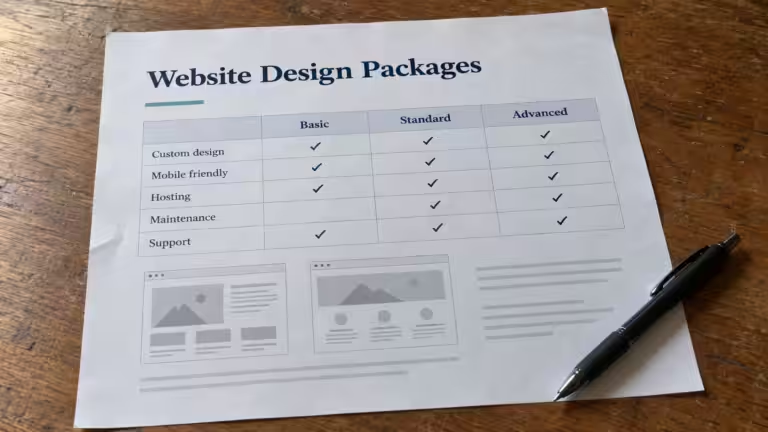
| Managed website service | A monthly fee that covers the build, hosting, and ongoing care | Owners who want a professional site without managing it themselves |
The upfront price is only part of it. Hosting, updates, security, and changes add up over the years. See the hidden cost of managing your own website and what website as a service costs.
Frequently Asked Questions
Do I still need a website in 2026?
Yes. Customers still check a business online before they call, and AI search tools and Google both pull information from business websites. A website is still the one place online you fully control.
Can I use Facebook instead of a website?
You can start there, but it isn’t a replacement. Facebook pages don’t rank well in Google, you don’t control the platform, and they look less established to many customers. Use social media to send people to your website.
Is it worth having a website for a small business?
For most businesses, yes. One new customer a month from the website usually covers its cost, and it also makes your referrals, ads, and social media work better.
What can I use instead of a website?
A Google Business Profile, social media pages, and directory listings like Yelp or Angi. They’re useful, but you don’t own them and they give you limited space to explain your business. They work best alongside a website.
How many pages does a small business website need?
Five or six is enough for most: home, services, about, reviews or work examples, contact, and a privacy policy. Add a page for each main service if you want to be found for each one on Google.
Explore the complete small business website guide for everything covered in this category, or browse all topics at Cindaro Resources.
Cindaro builds and manages websites for small businesses as an ongoing service, so you get a fast, professional site that keeps bringing in customers without you having to maintain it. See how it works or view our pricing.